(2018) I just received my first rejection letter from a queried literary agent. Milestone achieved. Now, the wait to see if there are any who think my attempt at a novel could possibly be profitable.
(January 2019): Make that three, and the time has elapsed where I’m extremely unlikely to hear back from any of the others. Looks like a failed attempt all around. I guess I just overestimated my ability.
(October 2019): I decided to submit to a new list of potential agents. Same result as before. A few summary rejections. The rest was silence. I’m giving up on this project.
(December 2019): I have completed a second novel, and am at the stage where it’s time to submit it for consideration. It would be my third attempt to publish something. I don’t want to try.
It’s utterly demoralizing attempting to publish. As I went through page after page of potential agents to query on my last project, there was a common theme: “over represented voices” aren’t wanted. Nearly every agent has an affirmative and celebrated bias against anyone who can’t consider themselves part of a protected minority. It would seem, based on this fact, that there wasn’t any market for products written by or for middle aged, straight, biologically male persons. Apparently, as a reader and consumer, I don’t count. Apparently, as an author I can have nothing to add to the conversation. My voice (as someone who fits all of those disfavored status epithets) isn’t valued and will only be considered if the result is guaranteed to be a colossal success due to some external factor like fame or political connection.
At this point, I’m again wondering why I spent so much time and energy on something that clearly isn’t of interest to more than two or three people. It’s a lesson I’ve learned three times now: nobody gives a shit about what I write. I enjoy it while I’m doing it, but the crash at the end isn’t worth it. Creating something without an audience to enjoy it takes a kind of self assured artist that is difficult to find in nature. I’m not really one of those. I’m ordinary in that regard just like I’m ordinary the ways that are currently disfavored by the literary community. Only the extraordinary are of any interest.
I have been to the mountain
And seen through the crystalline air
The valley below shrouded in fog
And the goal that lies just beyond

I have wandered the paths of the valley
Groping through gray of the mists
Feeling for wayposts and markers
Hoping to progess without knowing how

I can stand above and know the way
Or go below and press the path
But never both.
About a year ago, I started writing a story after a strong impression. It wasn’t a particularly happy story – it was a story that was initially meant to condemn the blood-lust and military adventurism that has characterized American politics for the last 80ish years. As I put the pieces together, it gelled around a protagonist who experienced some of the darkest aspects of conflict. I found writing it to be very difficult. However, I kept writing it as a means of sharing emotions and difficulties I couldn’t share otherwise. It was a sensationalized and amplified retelling of stuff I had in my head, stuff I had seen others live through, and things I had experienced; and writing it gave me a context to think. I also harbored hope that it might possibly help a few people understand what was going on in my head when I seemed to be struggling.
In that process, I created a character who clearly was dealing with significant PTSD. At the time, I wasn’t convinced that I deserved that label, but as I looked at what I had created (knowing fully where it had come from) I realized I needed help. I was still in denial about where I was mentally, thinking I just needed help with stress management and some depression, but it was enough to convince me to give the medical malpractitioners who had written me off months before another chance. I would try again to get help. I had no idea what I was in for, but I started down that road and kept writing anyway.
That story took on a life of its own, and grew into what was supposed to be a book about dealing with and recovering from PTSD. I knew where the character was, and had a plan to get to an end that didn’t feel like a total loss. Knowing that I wanted my personal story to end without a total loss (the same way I wanted the book to end), and finally getting to a point where I couldn’t keep going on the way things were much longer, I walked into the clinic through a full-on panic attack and started treatment. Not long afterwards, I was forced to admit that that label – PTSD – was mine to wear. It feels like a modern scarlet letter… The dysfunctional veteran.
That diagnosis was a hard and bitter pill to swallow. I still haven’t fully come to terms with it. However, I convinced myself that there was a silver lining… In the process of trying to unscrew myself, I hoped I would learn enough on my path to better to teach me how to end the story. It was a small upside, but at that point I was willing to take anything I could get.
For a while now, I’ve pressed on with the story, expecting to get to a point in my personal journey where I could understand and write about the kind of healing and acceptance the story required. If that failed, I figured I could make something up that would seem plausible, or at least not seem trite or totally cooked up. That hope has stalled out – at least for now.
The story is at a point where the journey of the protagonist needs to bring him closer back to being human and give him a path to acceptance and a viable future. Unfortunately, I don’t know how to write it – I don’t see a viable path to better. My physical future isn’t bleak by any means. In fact, I have great reason to hope the reasonably near future will be radically different from my past in positive ways. However, my progress in dealing with PTSD hasn’t been great so far, and I can’t yet see a successful outcome in my future. Maybe I expected too much.
As I’ve worked through the last few months of therapy, the coping mechanisms I used to use to carry on have been failing more frequently. The emotions, hyper sensitivities, inappropriate reactions, and other symptoms have been closer to the surface and harder to suppress. So far, at least, therapy has made it harder and harder to function. It’s going much slower, taking more energy, and making things harder than I had hoped. I still hope for improvement, but it seems a long way off. Right now, I’m hunkering down for the long haul and conserving resources for the real world.
The down-side for the two or so people who were interested in this story is that I don’t know how to write the rest of it. The two or three chapters I have done but haven’t posted feel hollow and overly simple. My creativity is too drained to make up a believable ending – I think it would be easier to make stuff up if I were on the outside looking in. Instead, my motivation is sapped by the work it takes to keep from choking people out for minor things, and I can’t see a path from where I am now to the better enough that would help me understand how to finish what I started.
To anyone who has been reading along, I’m sorry. Maybe check back in a year or so.
I’ve spent the last three years trying to decide if it was worth it to be on Facebook or other social media platforms. There have been times it let me know about major life events for friends and family I wouldn’t have known about otherwise. It has allowed me to keep in touch with folks who would have otherwise been lost in the chaos that has been the last 20 years. However, it has also been the cause of waste and unhappiness.
A while ago, I wrote about a decision to cut way back on it (https://www.diligent5.org/?p=2069). As expected, I quickly fell victim to the features designed to keep people engaged. After further thought, I decided to fix that problem permenantly… I have deleted my account.
Will I miss seeing things from friends and family? Yes. But if you aren’t close enough to know how to reach me without facebook, I suppose life will go on independently for the both of us just fine. The bad far outweighs the good in my opinion. I’m sorry you fell victim to the purge.
Plans tend to be a fairly regular topic on this blog. They have been a major part of my life. However, I am once again left to wonder why I bother.
Previously, I wrote about an opportunity I had to apply to be the EE department head at the Air Force Academy, and how that would interfere with the plans I had made to go back to the life I had left behind in Texas. That opportunity didn’t pan out, and I was grateful for that. I interpreted it a reason to hope that my original plans would work out. I hoped that this surprise “opportunity” to deviate from my plans would be the last. I was wrong. I was wrong in a big way.
When I left the house on my way back to Albuquerque after spending two exhausting weeks fixing it after severe weather came through and damaged it, I had a crushing impression that I would never live there again. I was devastated — physically after the work, and emotionally after the loss. I hoped that impression was the work of a disturbed mind, and that it would pass and that we would be able to return as planned. That was over three years ago.
A few weeks ago, Liz and I made an unexpected decision. We decided to sell the house in Texas and return to Utah. In many ways, this makes no sense. I have a firm job offer there. I have a house there. I have friends there. Why would I leave it all behind. The reasons are varied, and difficult to articulate. It’s enough to say that we aren’t going back. My plans, yet again, have been overcome by events, and I’m staring at uncertainty.
To be fair, I’ll find work. I’ll find a house. I’ll find new friends. We’ve done this many times before (except for finding work), and I know we can do it, but I’m so tired of starting over. Why is it that the best way for me to make sure something doesn’t happen is to plan on it happening. Perhaps I should plan on a major financial collapse and civil war… maybe that way we’ll be prosperous and safe for the indeterminate future.
Update: the house is sold, and (even stranger) it looks like we will actually be going back to Texas – at least for a few months. After that, who knows… We plan on settling down in Utah, but how we get from here to there is unclear at the moment.
Purposeless motion is chaos
That ends right where it began
Wasting both time and effort
When expended without any plan

Planning gives sense of direction
Providing a goal to achieve
Setting a clear objective
And something in which to believe

But plans have a transient nature
That shift with the altering tides
Changing the traveled direction
Till my plans and future collide

And the end point I had longed for
Falls victim to what must be
So sadly I concede defeat
And forcefully subjugate me
Almost 10 years ago I was in Florida with orders to move to Alaska the following summer. Excited at the prospect, I decided that one thing I wanted to do up there was hunt bear and moose, so naturally I went to the gun store looking for a rifle capable of taking that kind of game.
At the time, I wasn’t all that well versed in guns. I had lots of experience shooting with my family and with the military, but I had never spent the time to become particularly familiar with the ins and outs of hunting rifles. The only bolt-action gun I’d ever owned was over 100 years old and more of a museum piece than anything else. I had some vague ideas about different brands and models having good reputations but beyond that, I was clueless. I did know, however, that I wanted something bigger than a standard 308. I also knew that wood stocks could result in variability due to changes in temperature and humidity, and given that I intended to use it for hunting in Alaska, I wanted something impervious to weather — a composite stock was on my wish list.
Looking through the store’s inventory, I came across what I thought was a good deal that would fit my needs perfectly. It was a lightly used Winchester Model 70 chambered in 300 Winchester Short Magnum. I recognized the Model 70 as one of the guns I’d heard good things about, that was promising. To sweeten the deal, the rifle was on a “composite” stock and came with a scope. The whole package was around $450 out the door. I packaged it up in a cheap zipper case, bought a box of rather expensive bullets, and headed to the range to check out my new toy.
After the first shot I knew I was in trouble. It wasn’t even on the paper, and it kicked like a mule. One of the local range rats came over, and let me borrow his laser bore-sighter to get the thing on paper at least. Five rounds later, and I realized I had a bigger problem. At 50 yards, the grouping was over five inches (would be over 10 inches at 100 yards). Up to this point, I’d never found a rifle that couldn’t out-shoot me, so I asked someone else who was on the range to fire a grouping to make sure I wasn’t just being extra recoil sensitive. Their results looked like mine. It looked like I had actually found a rifle that was less capable than me.
After talking it over with a few folks at the range, their first recommendation was to point out that the scope and rings were very cheap and probably weren’t holding up against the heavy recoil. I grumbled, packed up, left the range, and ordered $400 worth of a scope and rings/mounts. My cheap gun had doubled in price before I had 10 rounds through it. With the new scope mounted and bore-sighted, I went back to the range expecting to see a 2-3 inch maximum grouping at 100 yards given that I routinely pulled off groupings almost that tight with open sights on the M16.
I was very disappointed. The groupings had tightened up by a factor of two, but were still about five inches at 100 yards. Had this been the $400 gun I’d started with, I would have probably been satisfied (at least for the time being), but now I was almost $900 into it, and it was performing like a $400 gun. Something had to be done. I did some homework to see what I could do. The barrel and muzzle crown looked good, but the “composite” stock was really just cheap plastic. Based on info I had available, it seemed likely that the stock was warping under the recoil and resulting in an unstable platform for the action and barrel.
I got online and ordered a good-quality carbon composite stock with the manufacturer’s assurance it would fit my rifle. It arrived and I realized that the barrel contour for the WSM chambering was much fatter near the action than a typical chambering, and that the stock would require extensive work to make it fit. To make things worse, I would need a new trigger guard and floor plate. After some searching I found a viable but unfinished (raw steel) trigger guard and figured I could just blue it. As for the stock, 80-grit sandpaper and lots of sanding would relieve the barrel contour. I’d be in business soon enough. Add these parts to the cost, and the rifle was now in the $1400 range.
By the time I had the stock fitted (mostly) and the trigger guard blued and mounted, it was time to move, so the rifle got packed up and moved north with all the rest of my stuff. Testing it out would have to wait. We drove north and I found other things to be busy with at work and home. The rifle sat and collected dust.
Moose season opened up, and I had found friends who would let me tag along with their hunting party since I had no idea what I was doing and needed help. To make sure I could at least hit a moose, I took the rifle to the range to see how much improvement I had made. $40 worth of ammunition later (about 10 rounds), and I had a four inch group at 100 yards. Slightly better, but not nearly what I had hoped. However, it was good enough for the moose I hoped to shoot, and I didn’t have time to do any more troubleshooting.
Several trips to the range over the next two years confirmed that I could only really expect about a four inch group, no matter what factory ammo I tried. Frustrated, I put the gun away and moved to Texas. There isn’t much call for a 300 WSM in Texas. The deer are the size of large dogs, and Pigs are better handled with something that’s quick, close, and has a heavy bullet like an AK-47 or a 300 BLK. Over the next four years I never once shot my 300 WSM.
Fast forward to the last year or so. New Mexico has some of the best Elk hunting in the world, and there are other species like Oryx that are notoriously tough animals that call for a long-range high-energy round. I had planned to put in for both Oryx and Elk, so I pulled the 300 WSM out of exile and decided to figure out how to make it shoot better. By this time, I had learned a lot more about guns and shooting for accuracy, and I took a more deliberate approach to figuring out what was going wrong.
Looking at the work I had done to fit the stock to the rifle, I realized that I hadn’t properly cut the barrel channel, and the stock was pressing on the barrel in several places. Most guns do best when the barrel is “free floated” — i.e. the stock doesn’t touch the barrel at all. The pressure on the barrel was changing depending on how I held the stock, how tight the screws were that held the action to the stock, what way the wind was blowing, etc… Change pressure on the barrel, and change where it points. I needed to work on the stock again.
Another thing I noticed was that the bluing on the trigger guard was rusting badly. I would need to do something about that if I wanted this gun to last and be worth half what I had put into it so far. Thankfully, I had recently had an excuse to experiment with CeraKote, and had some left over that matched the rest of the gun. I disassembled, sand-blasted, coated, and baked the guard. Thankfully, it turned out.
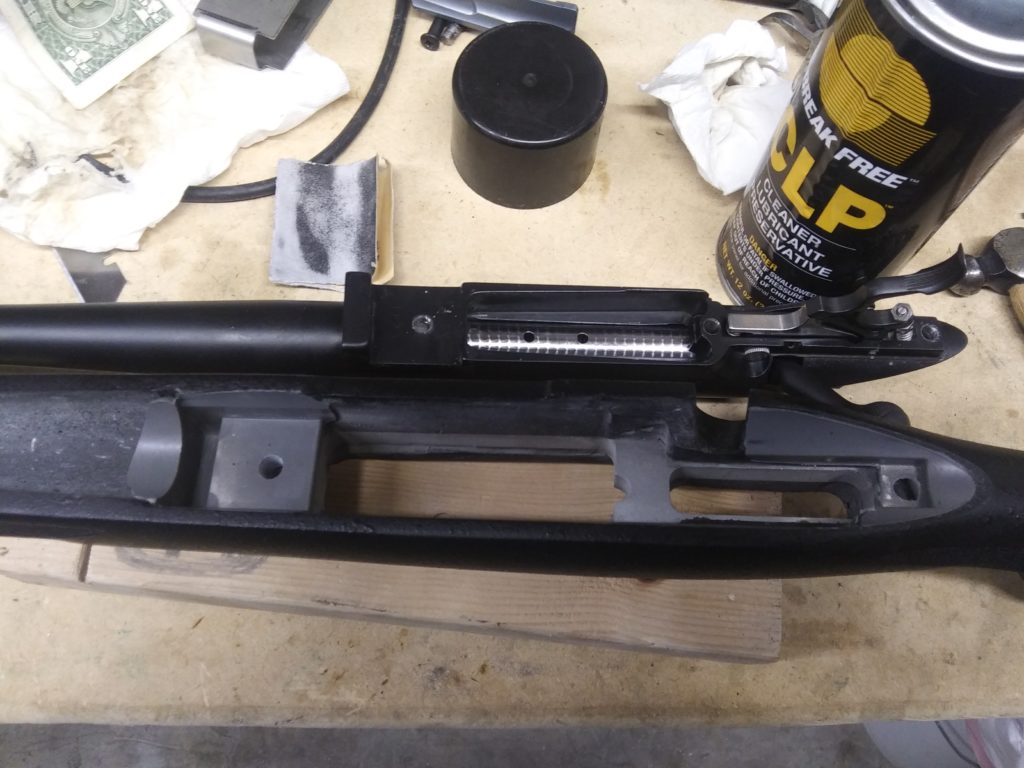
Since I was going to be working on the stock anyway, I decided to try my hand at glass-bedding. I relieved the barrel channel and went through all the prep-work to do a bedding job when I realized that the aluminum bedding block that was part of my fancy stock had been cut wrong. It’s supposed to provide rigid support between the action and the stock, but it was cut too short where the rear screw attached the trigger guard to the action. I ended up cutting and hand-filing a piece of aluminum to the right dimensions to fill the gap, then embedding it in the bedding compound to give a final rigid pillar for the rear screw. Other than that, the bedding job went better than I hoped, but I’m sure someone out there will find fault with it.
My DIY bedding job. The solid gray material is the bedding epoxy. I had to cut and shape a piece of aluminum to fit in the back of the bedding to fill a gab between the integrated bedding block and the action.
In the process of prepping for the bedding job, I got looking at the trigger. After borrowing a pull gauge from a friend, I confirmed something I had been suspicious of for a while. Even adjusted as far down as possible, the pull was heavy (often over 4lbs), gritty, and worst of all, inconsistent. Since I had the trigger apart for the bedding job, I decided to use some 1000-grit wet-dry sandpaper wrapped in a utility-knife blade (to provide a straight edge and prevent rounding) to polish the sear surfaces. That brought the pull weight down to a consistent and crisp 1.5lbs, which I adjusted back up to 2lbs for my own sanity.
In the time since Alaska, I had reacquired reloading equipment, and decided to take another variable out of the mix. I decided to buy the dies and bullets to develop a custom load for the rifle. Not only should that make things more accurate, but it also cuts the cost of shooting this thing substantially. Factory loads can run from $2 each to $6 each, but I can load them for about $0.75. I loaded up a series of loads, took my newly upgraded rifle to the range, and expected results.
I wasn’t completely disappointed. The first grouping came in at about one inch. Unfortunately, as I continued shooting, the groups opened up. Thinking through what I was doing, and paying close attention to fundamentals, I realized I was flinching pretty badly. With the ultralight stock and a hot load, the recoil is terrible. I’ve never been recoil sensitive before, but I am with this thing.
At this point, I’m probably about $1600 of direct costs into the gun, countless hours of messing with it, and another $500 or so in ammo, and I can’t shoot it accurately. A sane person would have sold it and bought a 308 or 6.5 creedmoor. Me… Time to throw more money at it I guess.
I like the 300WSM, just not the recoil. I can have a muzzle break installed and cut down on the recoil and help with the flinching. There goes another $200-ish. My $400 gun is anything but.
As I’ve looked at the various options, everyone has their subjective measurements for how much the reduction is, but those kind of stats bother me. I want to know how much it actually helps (it’s the geek in me). At this point, I’m mentally committed to putting a break on it, but I still want to know how much good it does. That’s where my nerd skills come in.
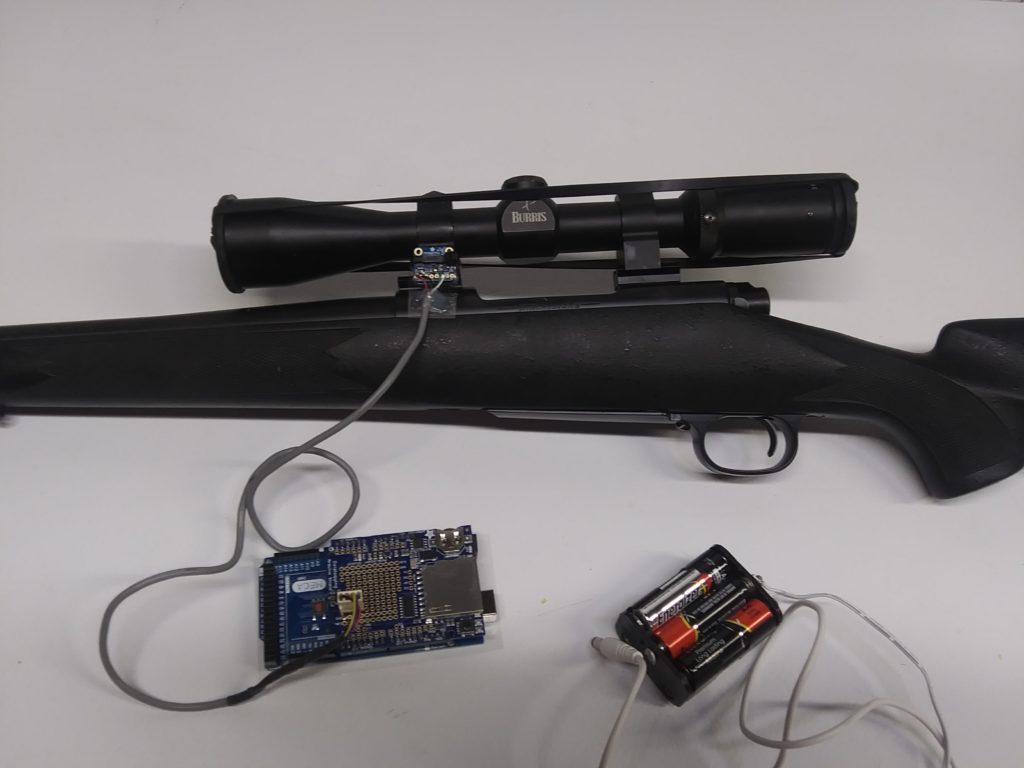
In my collection of project junk, I happened to have a 3-axis accelerometer and several microcontrollers that I can use for things like running sensors and recording data. I spent a weekend developing and optimizing a rig that will detect the recoil and measure the acceleration over the 100ms or so that it takes. Knowing the acceleration and the mass of the gun, I can compute the force applied to my shoulder and the overall impulse. Collect some data before the muzzle brake, collect some after, and I can quantify the improvement I get for my $200 — something I’ve not seen on any of the gunsmith’s web-pages yet.
The accelerometer is zip-tied to the scope mount, and connects to an Arduino Mega with a datalogger shield. The controller detects the recoil transient and dumps the accelerometer measurements to an SD card for later analysis.
Based on published data from others who have done similar things, I expected the +-8g range on the sensor would be plenty, so I took this setup to the range to establish a non-muzzle brake baseline. About 25 rounds later (with a mix of tight groups and flyers) I came home to analyze the data.
Recoil is along the x-axis, and over-scales the 8g range of the sensor. Movement in the x or y axes after about 2ms doesn’t impact the trajectory since the bullet has already left the barrel by that point. I’ll need to get a new sensor capable of a wider range to figure out how hard the recoil actually is. The short negative (forward) acceleration on the top graph at the beginning of the recoil is the firing pin slamming forward and hitting the primer. I didn’t flinch on this shot.The sensor actually triggered on my flinch instead of the recoil. It’s a little depressing to see hard evidence that I’m being recoil sensitive. The negative accelerations in both y and z mean that I pulled the muzzle down and to the right about 20ms before the trigger released and the gun fired.
I found two things in the data:
1. I flinch just under half the time, and it’s terribly obvious in the data when I do.
2. The 8g range is not enough. I need a sensor that can handle harder accelerations.
What next… Well, I have a new sensor on order. As soon as that gets here, I go to the range again. As soon as I get good baseline data and can cough up $200, on goes the muzzle brake, I’ll collect more data, can quantitatively compare the recoil, and (hopefully) finally have a gun that shoots like I want it to.
Kind of a long saga. I would have been so much better off financially had I spent $1000 on a better gun to start with, but then I wouldn’t have had so many challenging and interesting projects. Besides, there is something easier about spending a few hundred dollars at at time, even if it costs more over the long-run.
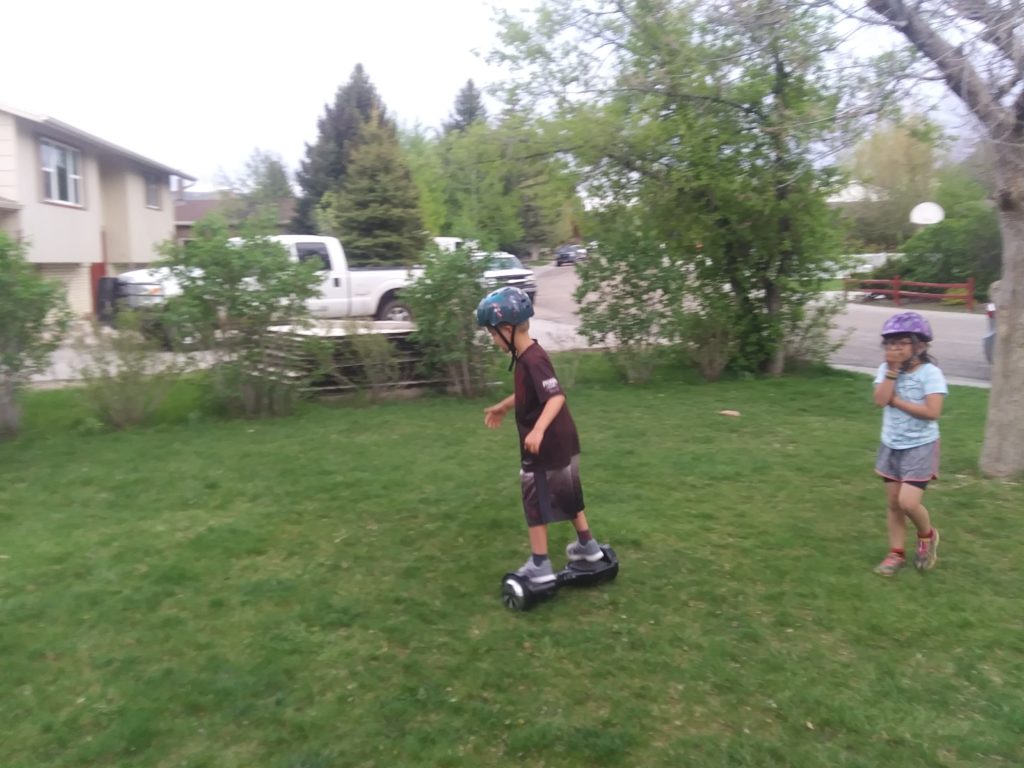
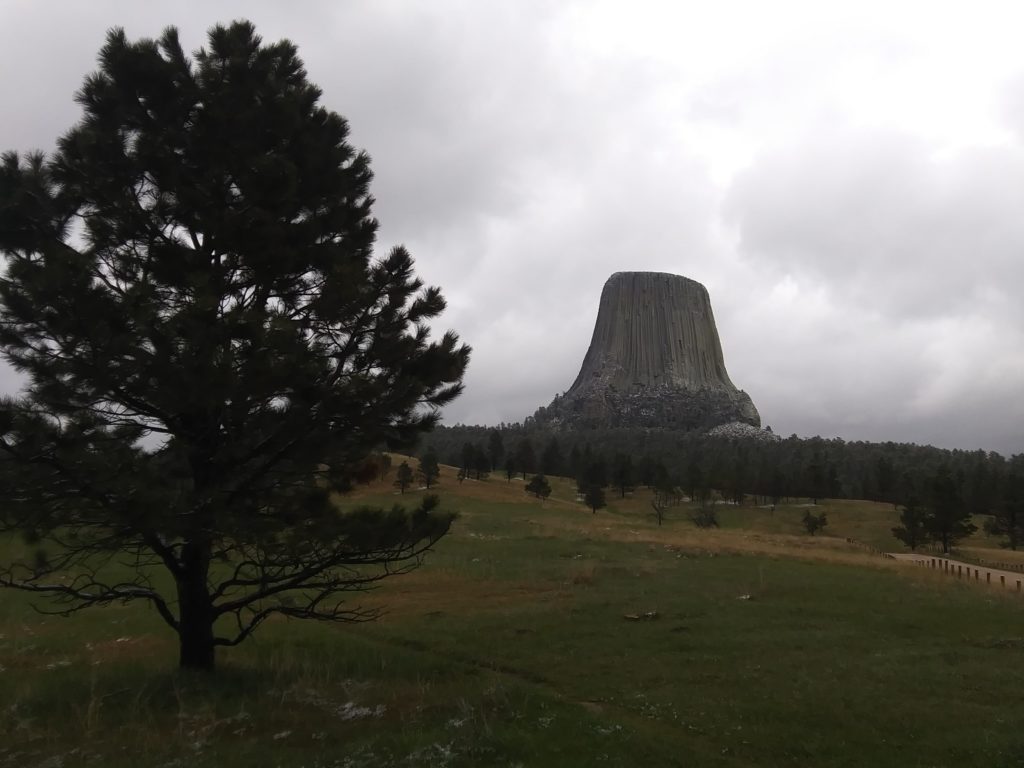
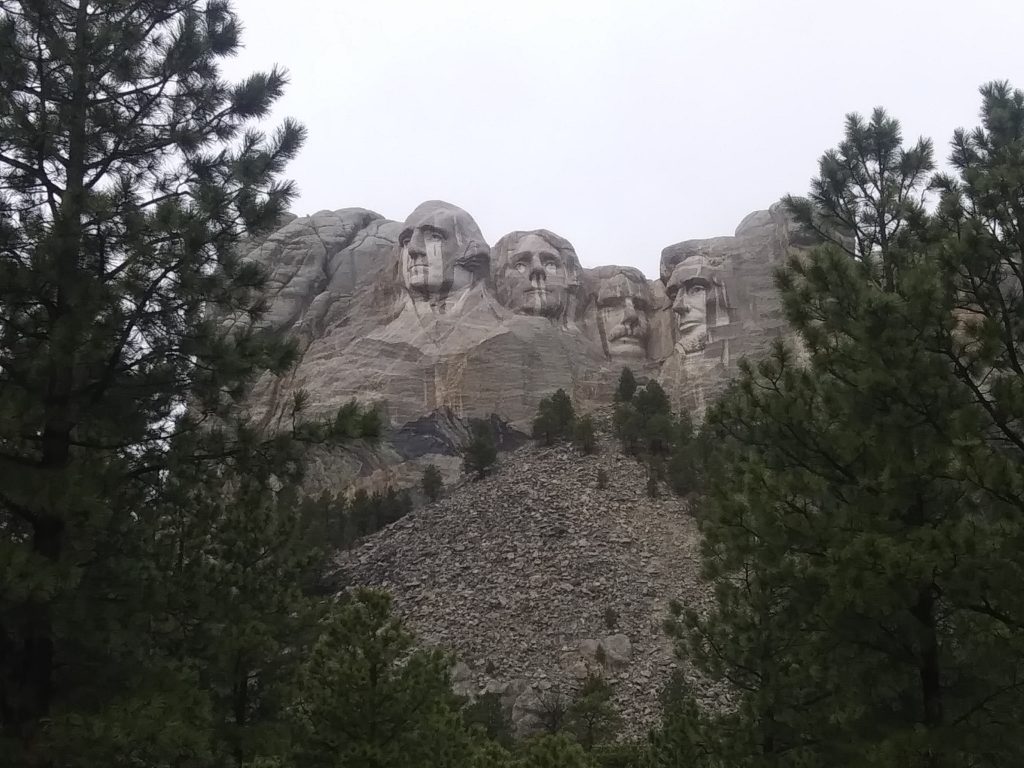
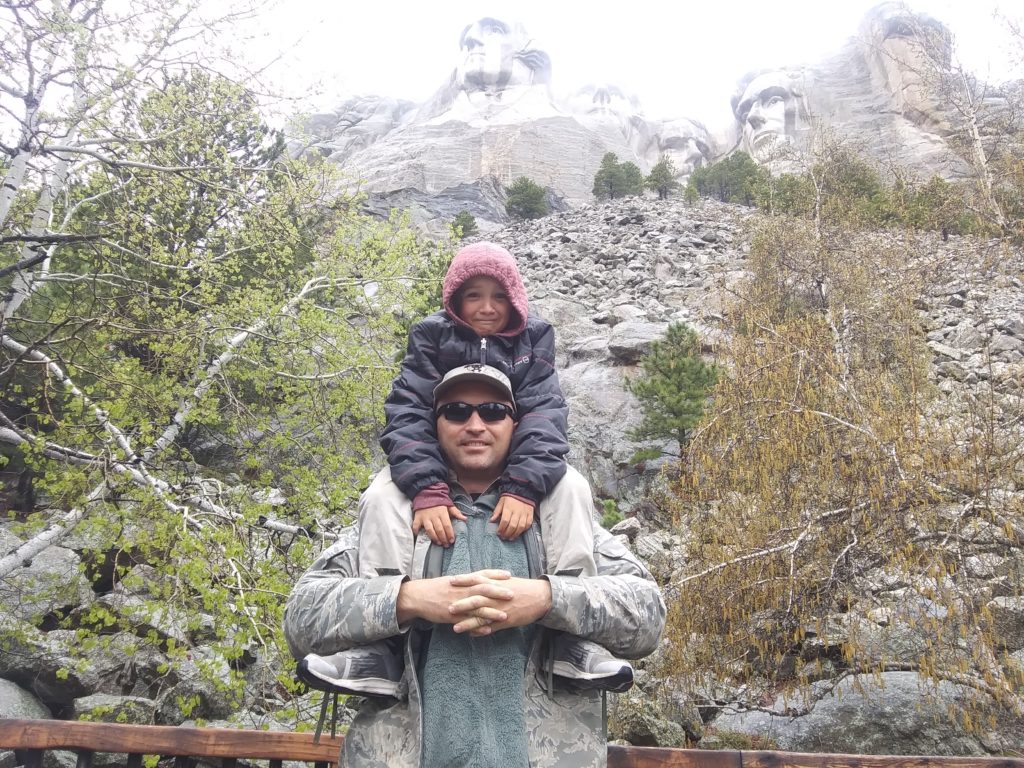
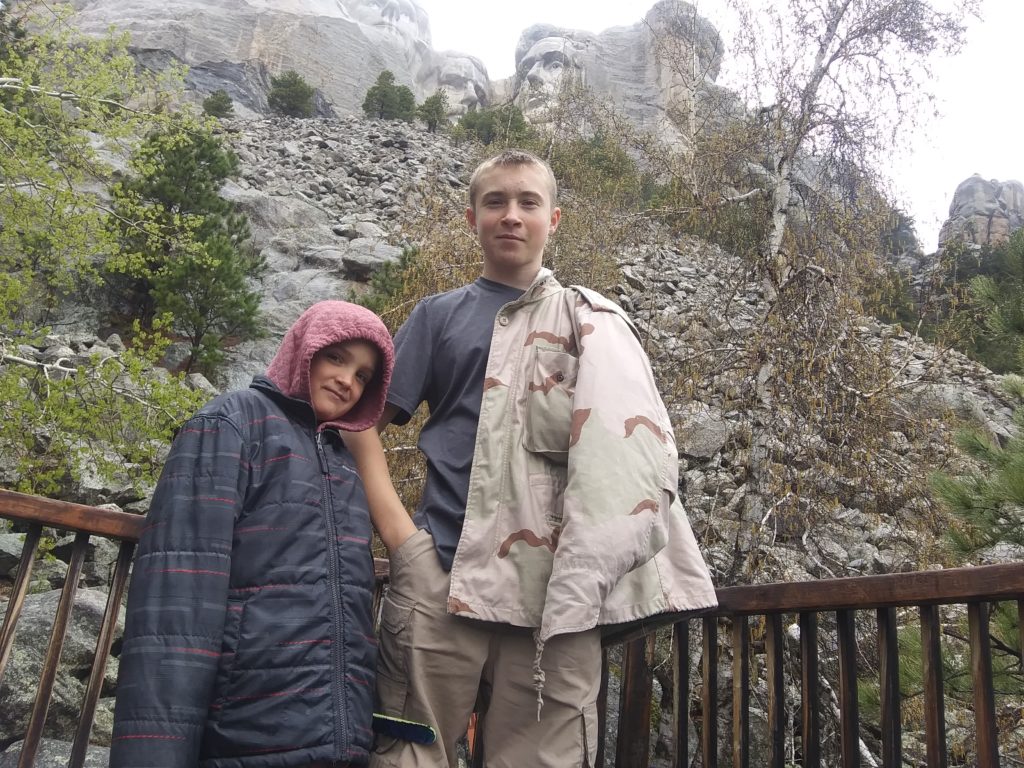
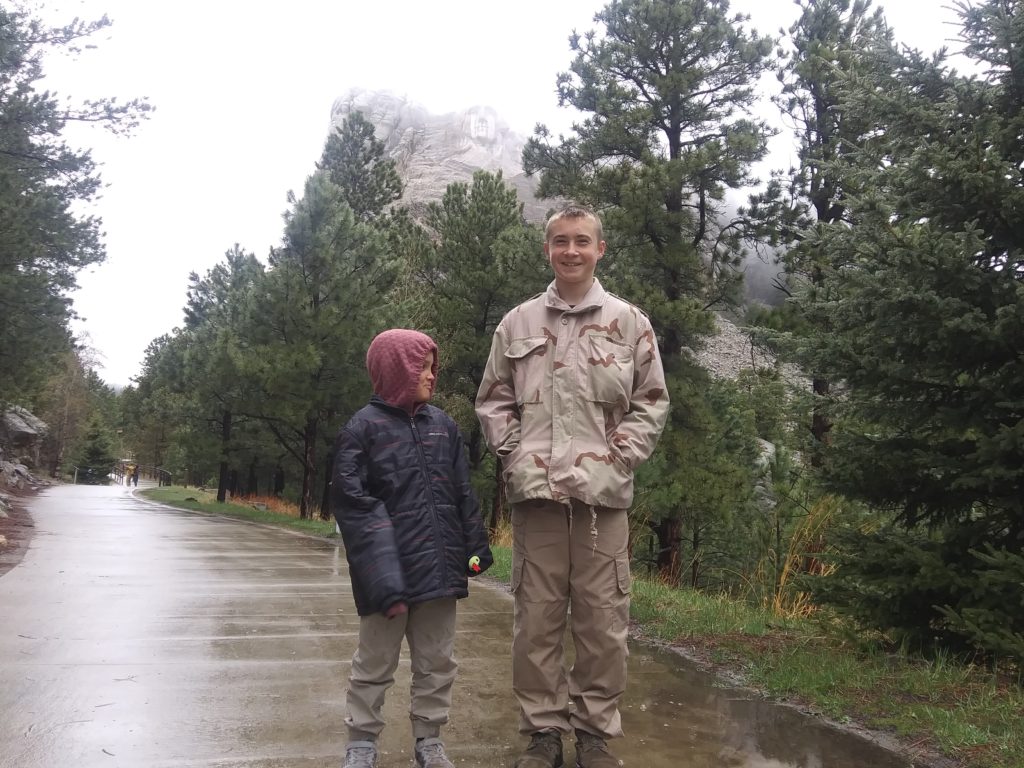
Circumstances conspired to the point that recently I discovered a need to drive to central Wyoming, then find a way to keep myself occupied for a few days before heading home. As you look at these pictures, keep in mind that they were taken in June — i.e. summer. Without much explanation, some pictures for your enjoyment.
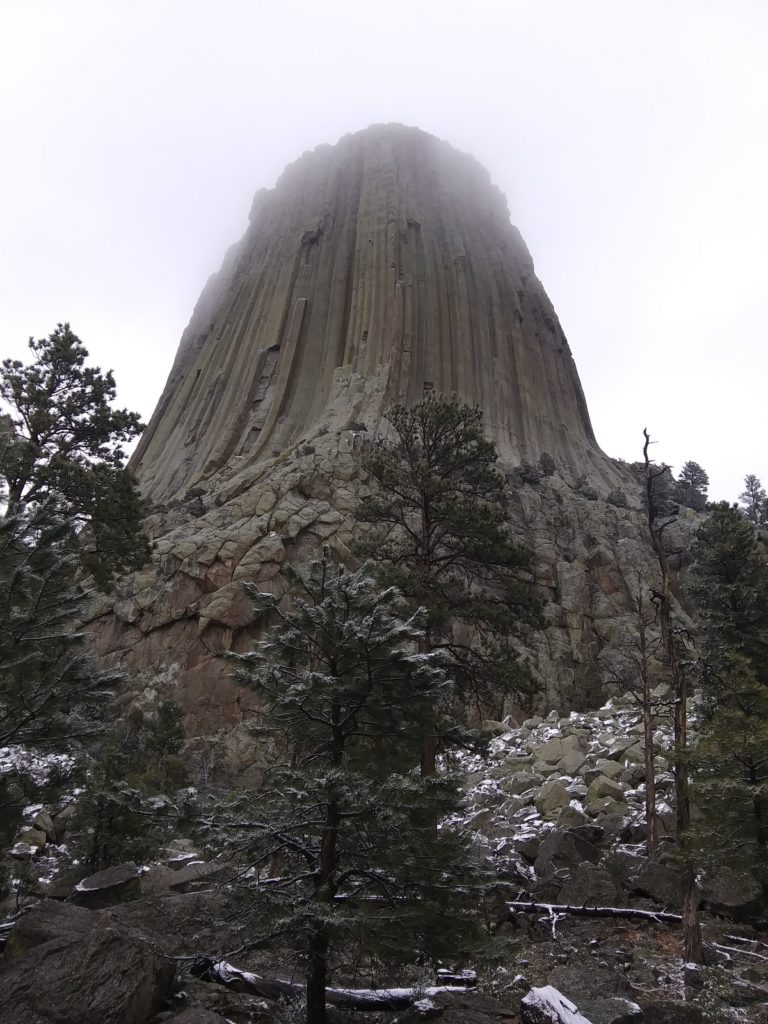
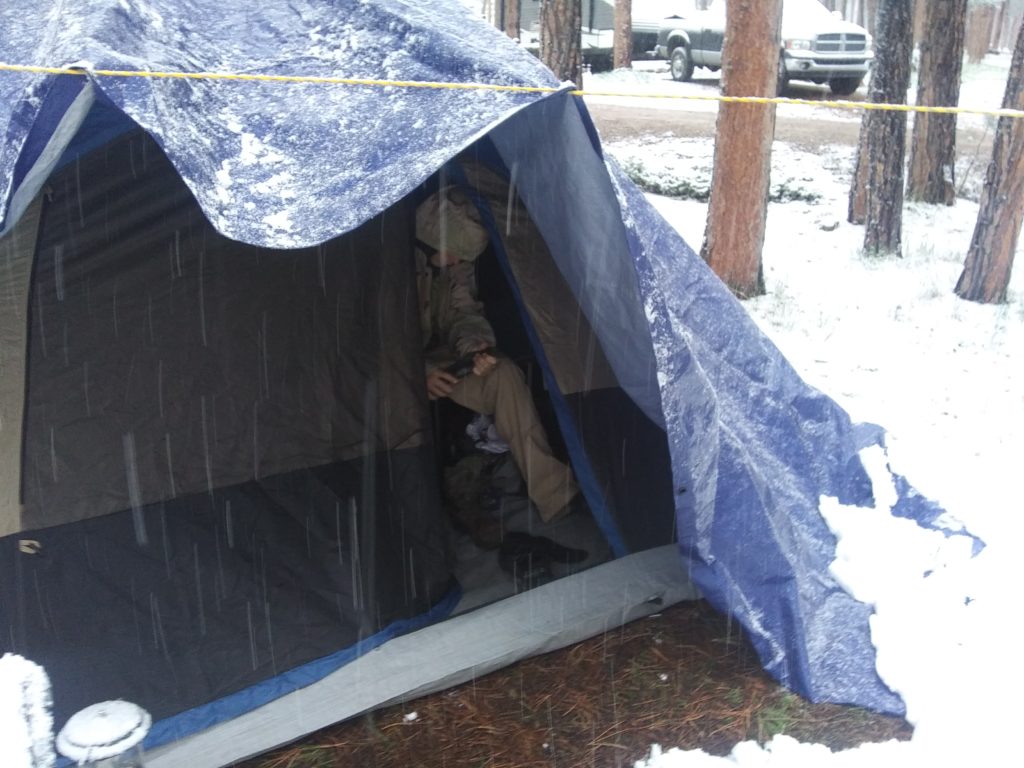
Devils Tower Wyoming (the missing ‘ is intentional and correct)We camped just north of Sundance Wyoming, and each morning woke up to a new layer of wet snow. We hadn’t expected winter camping conditions in June.Michael had more fund playing with friends for the half-day we stayed with the Messechers than during the rest of the trip. He’s a big fan on their battery-powered equipment like this hoverboard and several battery-driven minibikes. Originally we had only planned to go to Devils Tower, but once we got that far, it wasn’t too far to a few other noteworthy sites.Mount Rushmore was only a few hours away, and worth the drive. The mountain was hidden behind clouds for much of the time we were there, but it didn’t stop us. It looks like they are crying… I wonder why?Michael and me. I was glad I had thrown several extra layers (like the fleece, gortex and other layers I have on) in the car. I didn’t plan on needing any of it, but Mother Nature had other ideas. Michael and Isaac at Mt Rushmore. Given how cold and wet it was, and how many hours we spent in the car, the two of them got along amazingly well. It ended up being a lot of driving, but we saw some amazing stuff and generally had a great time. We didn’t get good pictures (thanks to the weather) but we also went to the Crazy Horse monument and toured Crystal Cave National Monument. Well worth the price of admission.